
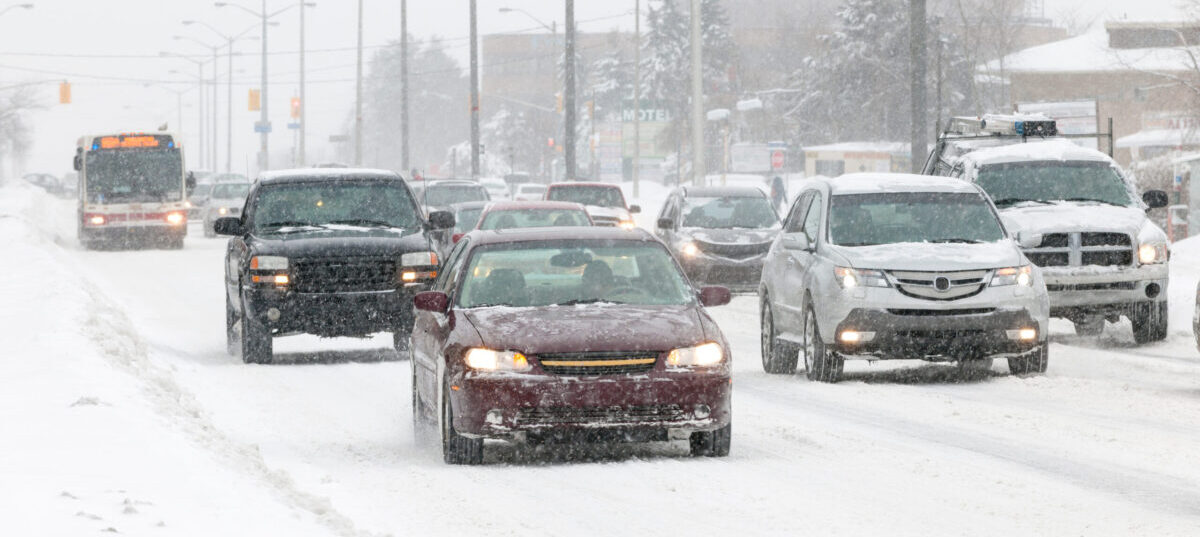
Winter driving can be dangerous, so as a business owner it is important to ensure your driver’s safety during the winter season by communicating safety precautions and equipping your drivers and vehicles with all the equipment and tools needed to survive the winter weather.
Make sure your fleet of vehicles is in optimal condition before each trip.
- All your vehicles should be equipped with winter tires, topped up on all fluids (engine oil, windshield washer fluid, etc.) and have at least half a tank of gas at all times.
- Inspect the vehicle’s battery. In the cold, a battery can experience troubles, especially if it’s older. If the vehicle’s battery is older than three years, consider replacing it before your driver becomes stranded.
Equip your drivers with an emergency kit for each vehicle. The emergency kit should include:
- Flashlight/ batteries
- A blanket
- A first aid kit
- Non-perishable food and water
- Jumper cables
- Salt
Before your drivers are required to work in poor weather conditions, communicate proper operating procedures. Drivers should be aware of the following:
- Know to clear all snow and ice off of vehicles. Not only is it the law but it ensures the safety of other drivers.
- Drive cautiously–ensure they are driving slowly and leaving space as well as looking out for black ice and pedestrians.
- Certain spots present an increased risk in bad weather such as exit ramps, bridges, intersections and windy or flat areas.